ABOUT AICA
Founded in 1950, the International Association of Art Critics (AICA) is a global organization that unites over 5,000 art professionals from 95 countries. Its mission is to promote art criticism as a discipline, protect the ethical and professional interests of its members, and foster international cooperation in the fields of artistic creation, dissemination, and cultural development. AICA encourages cross-cultural dialogue and defends the freedom of expression and thought across political, geographical, and cultural boundaries. With National Sections across Europe, the Americas, Asia, Africa, and the Middle East, AICA is committed to advancing art criticism and strengthening professional relationships worldwide.
Latest NEWS
FEATURED PUBLICATIONS
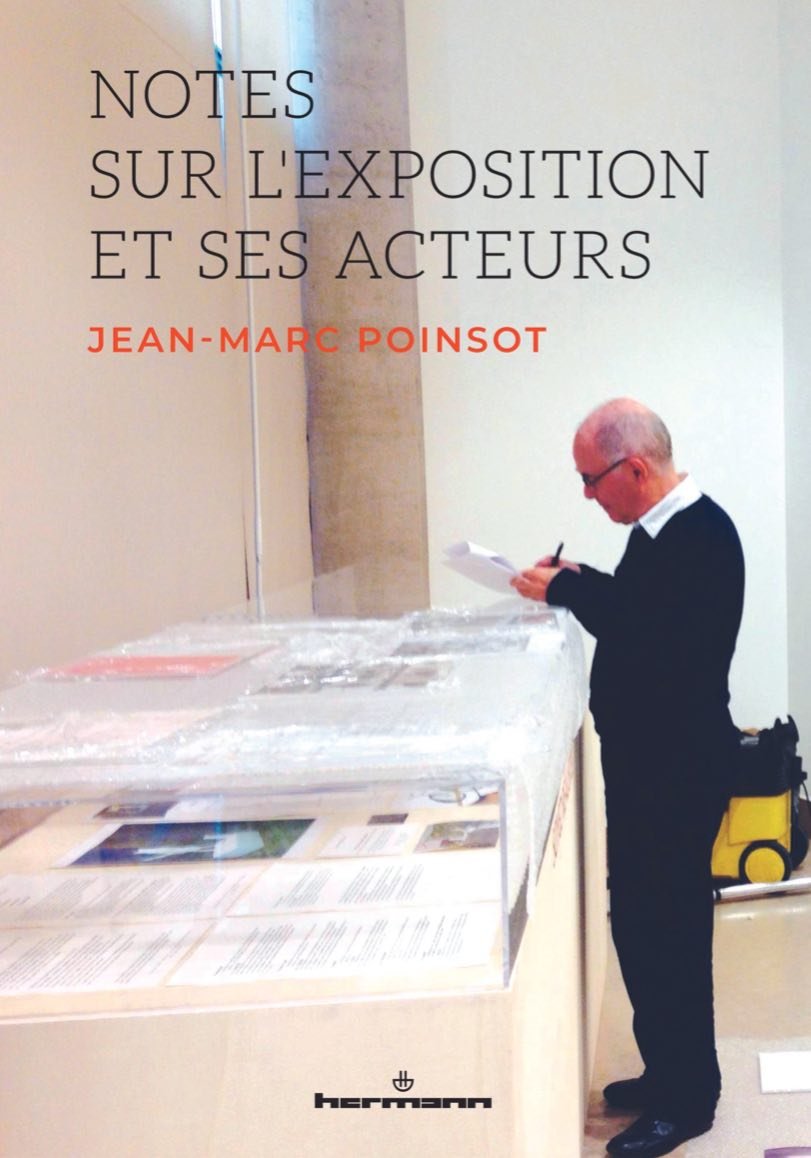
Dans l'actualité des vingt dernières années, Jean-Marc Poinsot, critique et historien d’art, fait un choix incisif d’œuvres et d’expositions. Il met en avant la portée critique des oeuvres qui « pensent » les problématiques des arts exposés dans nos sociétés.
S’attachant aux artistes et aux lieux d’exposition emblématiques, de Jan Leering, Harald Szeemann à Laurent Le Bon ou Jens Hoffmann, de Daniel Buren, Michel Parmentier à Pierre Huyghe et Wesley Meuris, à Paris, New York, Londres, Cassel ou Venise, tous trouvent leur place dans ce recueil de notes de Jean-Marc Poinsot. L'auteur y décrit le regard particulier, sensible, historique et théorique dont il a donné des exemples dans ses livres précédents, L'atelier sans mur et Quand l'oeuvre a lieu. Attentif à la manière dont les artistes se saisissent des libertés que leur propose le cadre d’une exposition, il s’attarde aussi sur leurs usages du langage dans et autour de leurs œuvres (récits autorisés). Il en vient à définir la notion élargie d’acteurs de l’art.
Jean-Marc Poinsot, après avoir été critique d’art et commissaire d’exposition à Paris (1970), a été professeur d’histoire de l’art contemporain à l’université Rennes 2 (1976-2014). Il a mis en place le FRAC Bretagne (1980), collaboré avec la Biennale de Paris à partir de 1971, le capc/Musée d’Art contemporain de Bordeaux (1978-1990). Il a fondé un des premiers enseignements en Europe sur les métiers de l’exposition puis créé avec l’AICA des archives de la critique d’art (1989) et leur revue Critique d’art (1993).
Review of Jean-Marc POINSOT - Notes sur l'exposition et ses acteurs by Maïté Vissault.
27 €
188 pages
15,2 x 22,9 cm
Publié le 22 novembre 2023 chez Hermann
ISBN: 9791037031204

Profiles in Postmodern Art
Although he reported on his ‘Art Fair Hangover’ already in 1989, Walter Grasskamp never left the business of art criticism but continued to write for newspapers, magazines and catalogues, when he started teaching at universities and academies. Known for his expertise in the political theory and social history of museums, exhibitions, and public art, he also fostered the oral history of German post-war art through interviews with painters, curators and gallery owners. Fascinated by the way artists have of establishing, developing and defending an individual oeuvre, he also wrote profiles that have been collected in two anthologies, in 1986 and 2010.
In addition to the essay ’Art Fair Hangover’, nineteen of these profiles, written between 1979 and 2019, have been selected for this book. They cover four decades of writing about contemporary art, fired by enthusiasm and scepticism alike.
Published with generous support from Kulturstiftung des Bundes, AICA Press’s series, Art Critics of the World, aims to offer the widest possible readership texts by original critics who best represent their countries, and who are not yet as internationally famous as they should be.
>> The publication is available in German on the website of AICA Germany (www.aica.de), with the title Walter Gasskamp. Ein Engel verschwindet.
Freedom of artistic expression is essential for cultural vitality and human rights. However, artists, curators, critics, and institutions often face censorship and restrictions. In response, AICA has created the "Silenced, Not Stopped" toolkit written by Eric Otto Wear.
This practical guide provides strategies to anticipate and respond to censorship, build alliances, utilize legal resources, and protect digital security. It emphasizes proactive planning, negotiation, and community collaboration to sustain artistic freedom.
For support or more information, contact AICA International at: aica.office@gmail.com.
This item is free to download. Simply add it to your basket, complete the checkout process, and you will be able to access it at no cost.